10.11.14

Gardens of Guns and Roses


There’s a family living on our block in a tiny home that’s dwarfed by the McMansions around it.  The backyard – much of which is visible from the street - features a huge shady gum tree and a vegetable patch.

In this house lives a family whose lifestyle seems a little trapped in the past.  The parents have a nice hippie vibe about them, and their two pre-schoolers are almost always playing in the yard.  By ‘playing’ I mean running, skipping, ball games, and games of ‘pretend.’  Elsewhere in my neighbourhood, children do exist but are rarely seen playing in their yards or driveways, let alone on a daily basis.


The appeal of these two children is how happy and friendly they are – and how quietly they play.  Their shout of “Hello!” as I pass by on my daily walk, is as loud as they get.  It takes me back to the 60s and 70s, when children seemed capable of playing games that didn’t involve screeching.  I’m not against noise per se, but against the growing trend for screaming as an integral part of physical play.  There are parents who'll argue it’s not only normal for kids to scream a lot, but somehow necessary.

Make no mistake, I grew up in a regular suburb filled with regular young families, but it was understood that screams were a sign of genuine distress, not something you did for fun. The only game that elicited screams was Kiss Chasey, and under threat of Boy Germs or Girl Germs, screams were entirely justified.  
 
Certainly we ramped the noise levels during games of ‘Cops and Robbers’ or ‘Cowboys and Indians’ but it still fell short of screamy.  We’d shout warnings or instructions, but screaming was seen as sissy – even for girls!   Am I wrong in thinking a lot of screaming these days, is screaming for the sake of it?   Or a form of expression or release, for kids who haven’t been taught better ways? 

This could easily spin into the much-discussed issue of children using toy weapons and pretending to kill, but I’m not going there. (But if you'd like to, I've provided a link below). 

Suffice to say, the violence of childhood play in the 1960s and 70s was far tamer, more camp, than what you see today.  And while the current generation of kids play these games and see being ‘killed’ as a dealbreaker (“What, everybody’s not a winner?”) we saw a performance opportunity for an elaborate death.

As for that “70s family” living nearby, my pastel fantasy is that the children have never touched an iPad, never used a laptop, rarely watch television.  For all I know, beyond the charming leadlight front door of their modest home, rooms may be filled with screens and hi-tech gadgetry, but I get the feeling this is a family with a low-tier internet bundle.   

I hope those children don’t change too much when they start school.  Will their old-fashioned enjoyment of life be appreciated or quashed?  Will the other kids laugh at their gentle ways; create peer pressure to move most of their play indoors? 

When the inevitable happens, I hope they at least continue to use their imaginations, and perhaps convert some of their viewing, into outdoor play.  After all, some of my finest memories of being 8 years old involve the enormous honour of the neighbourhood kids casting me as Dick Tracy (see, it wasn’t all gender stereotypes back then), and spying on the ‘baddies’ from my vantage point in the low branches of a willow tree, waiting for Joe Jitsu to contact me on my wristwatch radio. 

                               “Six-two and even, over and out!” 
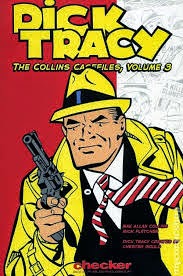

Further reading:

9.5.14

That's What Friends Are For


I’m captivated by the Channel 10 series Puberty Blues. There are many reasons -  most based on nostalgia - but especially because the friendship between the two main characters reminds me so very much of the friendships of my teen years, particularly the one formed with my first high school ‘bestie.’  The hair styles and wardrobe matches are scarily close:  Staggers jeans, snug little "Tommy" (the rock opera) tee shirt, Converse hi-tops and Sportsgirl tote, anyone?

Teen friendship is in a class of its own.  ("Puberty Blues" Photo courtesy Network 10)
Lesley and I began secondary school in the same class, still ‘hanging’ with girls we knew from our previous schools.  Yet just a week into Year 8, following a series of exchanged glances and smiles, we claimed a double desk for ourselves, and sat together in class for the next three years (not including the brief teacher-enforced separations familiar to any such twosome).

Our homes were several kilometres apart, in opposite directions, so sometimes when we arrived home, we’d phone each other (back in the days when nobody had a mobile, let alone Facebook) to continue a chat we began at the school gates.  Our mothers muttered in the background “You were with her all day! Whatever do you find to talk about?” 
These were our 'text messages,' kiddies.

It’s intriguing how an earlier generation forgets the depth of a teen girl friendship – unless perhaps, such attachments weren’t as deep in ‘their day?’  Yet literature from earlier eras suggests that teen years friendships are perennially meaningful; their depth seems almost a rite of passage

In truth, we always had something to talk about: everything and nothing.  Even in class, matters that couldn’t wait until lunchtime, would be dealt with via Secret Notes. 
 
In an all-girls school, friendships were probably less complicated, since there were no boys to distract or divide us.  Others may argue the all-female hormonal vibe was gossip fuel in itself.  A fond memory is the simple pleasure of sitting on the school oval at recess or lunch time, uniforms tucked into our knickers as we slathered baby oil on our legs and tried to get a tan happening.  (Side note: The 1970s was pre-sun awareness, a time when radio stations sent dune buggies to beaches to provide free sprays of coconut oil for sunbathers.  On hot days, they'd helpfully broadcast half-hourly reminders to ‘turn over’ to ensure you got an even tan.)

NOT on my turntable. *adds horns*.
Our shared love of music also began as a thing of joy.  In the end, it drove a wedge between us.  The specific culprit, in my eyes, was 1970s popstar John Paul Young.  To quote a lyric from his 1976 hit song I Hate The Music - “the music tore us apart.”

Lesley liked Donny Osmond; my heart belonged to David Cassidy.  She was into Sonny & Cher; I preferred the Jackson Five.  That was fine for a long time, because we both loved Sherbet.   By age 15, when I was into Glam Rock, Lesley became obsessed with John Paul Young - deeply obsessed, for several years to come.  At times, my observations on her fandom were  undiplomatic.  I wondered how anyone could compare “Squeak” (as JPY was known) to Queen, T-Rex, The Sweet or Elton John.

I know ... I know ... but I was 13
Recognise my rage?


Our music tastes became disparate.  Neither of us cared for the other’s opinion, so of course, began spending more time with friends who had similar musical leanings.  There was no explosive moment and we remained on speaking terms, but I sometimes felt sad that things were never the same, because we had some wonderful times and a lot of great laughs.
 
Perhaps music was simply an allegory for other wants and needs in our lives.

Other friendships come and go, and if you’re lucky, you find even stronger ones as life goes on.  Yet there’s something about the teen years – perhaps puberty combined with the ‘hothouse’ of the classroom and schoolyard – that burns those friendships into your memory.
                                                           
Sherbet .. well, "Garth" as I called it.  Guys with girl hair


25.10.13

..................... ♫ Misty Water-Coloured Memories ♫ ..................


Ask me to lose myself in memories of childhood and the backdrop that springs into place like a theatre prop is the garden of our family home.   My childhood is set mostly in summer, with brilliant sunshine dappling through large shady trees.  If I listen to the memory, I hear nothing but birdsong and, if the lawn’s just been mowed,  perhaps the gentle shwp shwp of a sprinkler.  The scent of moist, freshly-cut lawn touches my heart more than the high notes of a fine French perfume.   In this memory, the blunted blades of grass tickle my bare feet but I revel in the cooling dampness, as the sun warms my back.    

I know it’s morning if there’s the clatter of the metal rubbish bin as my brother drags it into place to use as the wicket for our game of backyard cricket.  I kneel under the hibiscus bush, rummaging for a soggy tennis ball (I know, I know, but they were less likely than 'real' cricket balls to break windows or noses).  I crawl through to the other side, triumphantly holding the ball aloft as huge orange flowers drop pollen, like fairy dust, on my tanned shoulder.  

I know it’s evening if I’m simply outstretched on the lawn, watching the sky colour change through the branches of the Virgilia tree, mesmerised as the  pretty pea-flowers mute from pink to grey when the sun dips.   My trusty ‘tranny’ lies somewhere nearby, playing a commercial for Woodie’s Lemonade, and then a  bit of  T-Rex or Sherbet … just loud enough for me to hear, just quiet enough to avoid music judgement from Mum.  


In 1970s Australia, big gardens weren’t just the province of the rich.  And everybody had a nice front yard - all the better to add prestige to our humble homes,  where neighbours vied against each other in an unspoken war of the (best) roses.   Oleanders clustered along paved edges.  Poplar trees lined the driveways.

 Today, the Poplars are skinny Pencil Pines.  And Pencil Pines are about the only tree any new home seems to boast.  How many suburban children still grow up in a home with a proper shade tree?   For that matter, how many have daily access to a real garden, rather than a tiled courtyard?  Their suburban home might have just a  couple of square metres of instant lawn at the front, and even then, it never plays host to a frolicking child and  dog.  

I’m a fan of balance and order, but the symmetry of modern gardens leaves me cold.   Straight lines of English Box Hedge are one thing, but a row of Iceberg Roses by the window, or six Agapanthus in a tiny front yard, does not a garden make.   Our parents and grandparents would always have a large clear lawned area, but that was surrounded by a delicious array of (mostly) non-matching plants that made everyone’s garden -  no matter the size – unique.  Most importantly, they had trees.   Many were shade trees and yes, many were introduced species – but it was colour; it was Nature.

Backyards of the era generally featured fruit trees – gnarly, ugly beings in the winter, but a delight of pink blossom at spring-time, and shady, bountiful friends in the summer.   Keeping chooks (hens) wasn’t uncommon.  My home never had any, but the memory of the soft bok bok bok from the neighbour’s coop brings instant comfort.
 
I fear Generation Y's childhood recollections will be hard-edged, in beige or grey.  Likely they’ll feature lots of screens.  Screens are quite simply a huge part of modern life for children.   For those of us from the 1960s and 1970s, the TV was a box in just one room.  Fewer shows were aimed at children, and even then, rationed out by Mum.   The phone in the hallway (on its own special table) was rarely used and most certainly didn’t have a screen.   Computers didn’t exist for the masses.   Even the ones we saw in science-fiction movies didn’t have screens, just lots of blinking lights and a suspicious resemblance to giant tape-decks.

Back when trees were more common than screens, we had a half-holiday in celebration of trees, called Arbour Day (later renamed Conservation Day, before disappearing right off the calendar, along with proper front gardens and backyard trees).

I reject the idea that trees consume too much water.  In any case, a shaded garden needs less water, not more.  Deciduous Trees also create summer shade which ever-so-slightly reduces ambient temperature, which should reduce summer cooling costs at some nano-level.  Most importantly, trees bring the tranquility of green-ness.  Unlike fleeting annuals, or trendy drought-tolerant agaves, trees become old friends.

When a person dies, people sometimes plant a tree ‘in their memory.’    Why wait until they die?  I wish everybody would plant a tree now, for a lifetime of memories, not posthumous ones.

Is Nature missing from the lives of ‘modern’ kids? 

Are weekend visits to the park a good enough substitute?

Do you remember the half-holiday of Conservation Day?

Will staring at all those TV/computer/phone screens eventually cause the evolution of square eyeballs?

I'd love to hear your comments.


27.11.12

Can't Stop The Music

Who remembers learning these songs at school in the 1970s?


  • Blowin’ in the Wind   
  • The Marvelous Toy
  • La Cucaracha  
  • The Ash Grove       
  • Tzena Tzena                   
  • Cileto Lindo                
  • Moon of Silver White 
  • Flash Jack from Gundagai
  • I've been Working on the Railroad    
  • The Happy Wanderer


In 1970s Australia, school music programmes included lessons via radio from the national broadcaster (ABC).   The lessons were piped through the PA system to each classroom.  The large wooden box speaker above the blackboard was as much a fixture as the framed portrait of Queen Elizabeth 2nd and the useless ceiling-fan.   We’d lean forward, elbows on the desk, gazing into space or doodling on the songbook as presenters with quasi-English accents walked us through music basics.

We were taught songs from around the world, including quaint English ditties, European folks songs, the occasional mysterious "Oriental" number and slightly grandiose Italian songs.  "Negro spirituals" were especially common, the lyrics written in a vernacular now likely be considered racist.

Other songs questionable by today’s standards included those about:


  • Sick and dying childen (luckily, they could be cured with Shortnin’ Bread)

  • Miserable working conditions (Drill, Ye Tarriers)

  • Mocking someone as "cock-eyed" (The Drummer and the Cook - “with her one eye on the pot and the other up the chimney”

  • The lazy, useless wife of a Scotsman (The Wee Cooper of Fife)


  • An old woman who died after swallowing a variety of animals  (There Was an Old Lady … )

  • A monster being run over by a tram  (The Ombly Gombly)


There was a never-ending song (Chuffa-Luffa Steam Train) and a ridiculously short song which I will write here in its entirety:

“There was on old crow / Sat upon a clod / 
That’s the end of my song /  That’s odd”

Certainly it gave us a sense of mastery ("Mum, I learned a whole song in 15 seconds!").   Songs sung 'in rounds' were popular, such as Row Row Row the Boat and Kookaburra Sits in the Old Gum Tree.**    

Nonsense songs were included to encourage those who weren't musically inclined.  The nonsense reached tremendous and very 1970-ish heights one year when the ABC ran with the theme of space travel, apparently inventing songs especially for the occasion.  
If anybody else remembers trippy tunes about the “astronautical ship” on which Zolt the Third took us to the “Gracious Star of Zap”  then by all means help me relive the horror.


Please do share memories you have about any primary/elementary school music programmes.
  

**  Australian pop group Men at Work worked a distinctive riff from  Kookaburra Sits in the Old Gum Tree  into their anthemic hit  The Land Down Under  and made it more enjoyable than I EVER remember it being at school.